How to Use a Stethoscope for a Chest Examination
A simple, direct step-by-step script you can use when examining an adult patient. Read this aloud or keep it handy on shift.
Intro "Hello everyone. Today, we're going to go through the proper procedure for using a stethoscope to perform a chest examination on an adult patient. This is a crucial skill, and following these steps correctly ensures we get accurate results and provide good patient care."
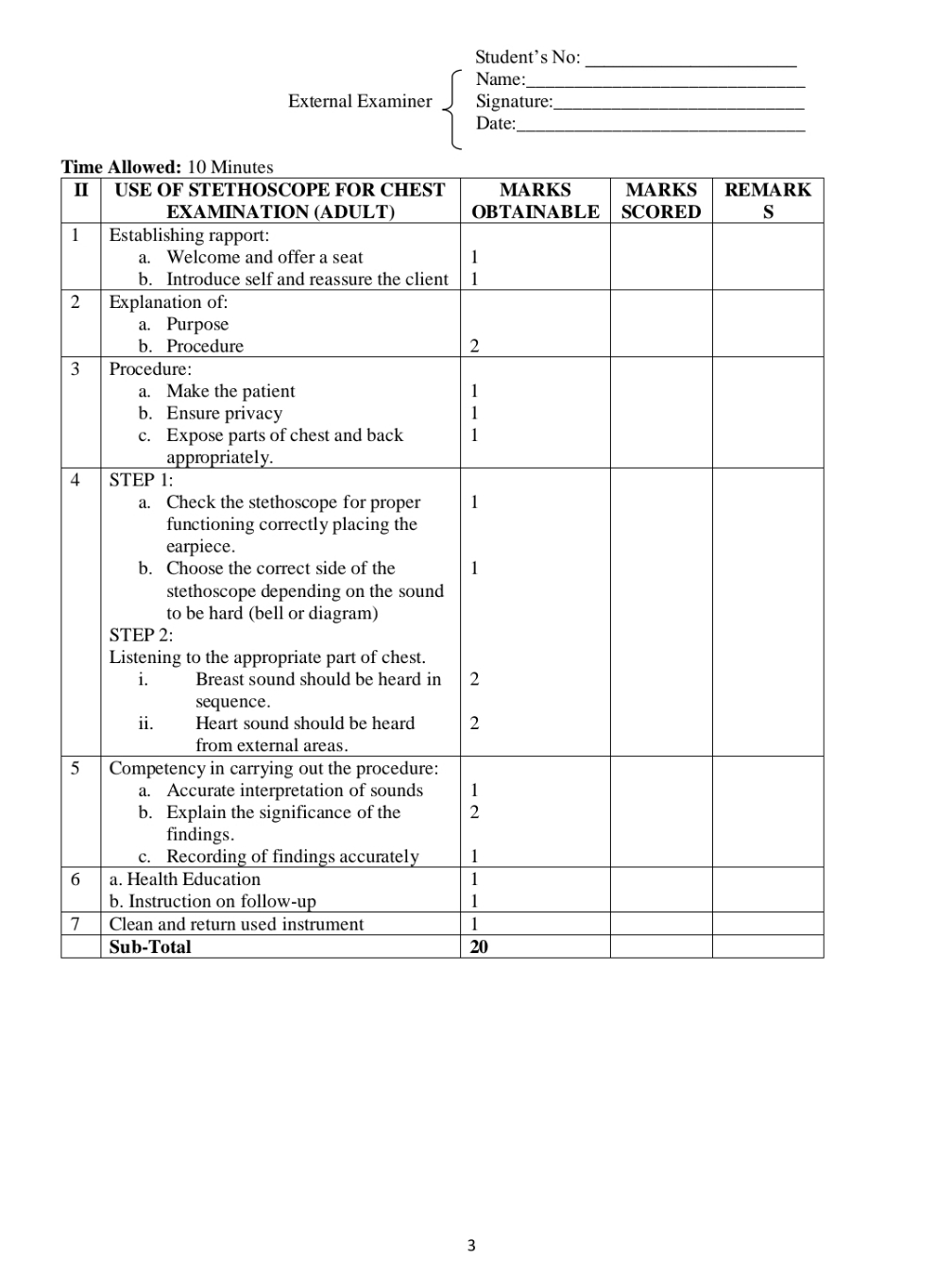
1. Establishing Rapport
Use a warm, respectful tone. Put the patient at ease before you begin.
"Welcome the patient and offer them a seat. Hello, please come in and have a seat."
Then introduce yourself:
"My name is [Your Name], and I'm a community health worker. I'm just going to perform a quick check of your chest and lungs to make sure everything sounds normal. There's nothing to worry about, and it won't take long."
2. Explanation of the Procedure
Tell the patient what you will do and why. Clear explanation reduces anxiety and improves cooperation.
"This examination helps me listen to the sounds your lungs and heart make. This can help us check for any signs of breathing problems or other issues."
Then explain what you will ask them to do.
"I'll need to listen to your chest and back, so I'll ask you to remove your shirt or open your clothing for a moment. I'll ask you to take some deep breaths for me while I listen with my stethoscope."
3. The Examination Procedure
- Make the patient comfortable: Sit them up unless lying down is needed.
- Ensure privacy: Close doors and curtains. Offer a gown or sheet. Say: "I'll step out for a moment while you get ready."
- Expose the chest and back appropriately: Place the stethoscope on skin, not over heavy clothing, to hear clearly.
4. The Examination - Check and Listen
- Fit and function: "Make sure the earpieces face forward into your ear canals. Tap the diaphragm lightly to check sound."
- Diaphragm versus bell: "The diaphragm is for high-pitched sounds like breath sounds. The bell is for low-pitched sounds. For lungs, use the diaphragm most of the time."
Use a systematic side-to-side pattern. Compare left and right at each level.
"For breath sounds, start at the top of the chest and work down. Listen on the front and the back. Ask the patient to take a deep breath in through the mouth and out each time you move the stethoscope."
For heart sounds, listen at the valve areas.
"Listen at the aortic area, pulmonary area, tricuspid area, and mitral area. The apical pulse is usually at the 5th intercostal space, mid-clavicular line."
5. Competency and Findings
After listening, interpret and record what you hear.
- Identify normal versus abnormal: Clear breath sounds are normal. Wheeze, crackles, or rhonchi are abnormal.
- Explain significance: "I hear some crackles, which could be a sign of fluid in the lungs."
- Record findings: Use accurate language in the chart. Example: "Bilateral breath sounds clear to auscultation" or "Wheezing noted in both lower lung fields."
6. Health Education and Follow-up
"Your lungs sound clear, which is good. To keep them healthy, it's important to avoid smoking and stay active."
If you heard abnormal sounds, tell the patient what happens next:
"I heard some unusual sounds, so I'm going to recommend you see a doctor at the clinic for a more detailed examination. I'll write a referral for you."
7. Cleaning and Ending
Finish the visit professionally and safely.
"Clean the stethoscope with an alcohol swab. Thank the patient for their cooperation and make sure they understand any next steps."
Follow this script to deliver a respectful, accurate chest examination every time. Practice will make these steps smooth and natural.