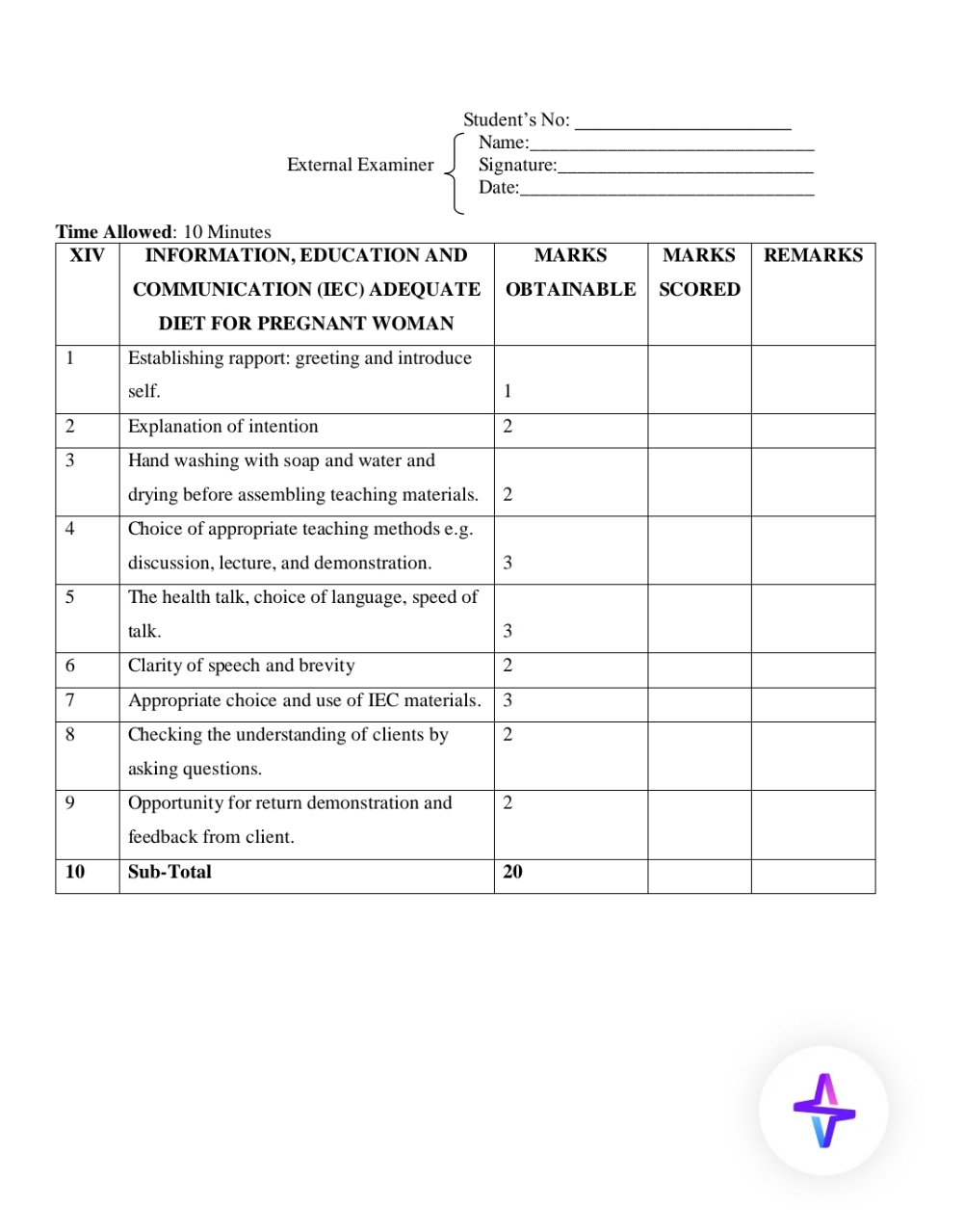
IEC Session Guide: Right Diet for Pregnant Women
A practical, clinic-friendly guide for community health workers running a one-on-one education session. Follow these steps to meet the evaluation criteria and deliver clear, patient-centered counseling.
Purpose
This short guide walks you through a step-by-step teaching session in a clinic setting. Use it during prenatal visits to educate pregnant women about practical food choices that support maternal and fetal health.
The Session — Step by Step
1. Establishing rapport: Greeting and Introduction 1 Mark
Welcome the woman with a warm tone, smile, and eye contact. Keep it short and genuine.
- What to say: "Good morning. Please make yourself comfortable."
- Introduce yourself: "I’m [Your Name], one of the health workers here today."
- Why it matters: A friendly start builds trust and makes the client more receptive.
2. Explanation of intention 2 Marks
State the session objective in plain language so the client knows why you are talking about diet.
- Say: "As part of your prenatal care today, I’d like to spend a few minutes talking about the best foods to eat during pregnancy."
- Emphasize: "A healthy diet helps your health and your baby’s growth."
3. Hand Washing with Soap and Water 2 Marks
Wash your hands before using any teaching aids. Explain briefly why you are doing it.
- How to say it: "Excuse me for a moment; I’ll wash my hands before we use the materials."
- Follow the clinic protocol: Wet, soap, scrub 20 seconds, rinse, dry with a single-use towel.
- Why: Shows professionalism and models good hygiene.
4. Hand washing with soap and water 3 Marks
Use a mix of discussion, demonstration, and short lectures to suit the client’s learning style.
- Discussion: Ask about current eating habits. For example, "What foods have you been enjoying lately?"
- Demonstration: Use posters, food models, or a laminated food chart. Point as you explain.
- Brief lecture: Share key points in short, plain sentences and check for understanding often.
5. The Health Talk: Language and Pace 3 Marks
Speak in the client’s preferred language. Avoid jargon and speak slowly so she can follow and ask questions.
- Simple phrasing: "Eating dark green leafy vegetables like spinach, beans, and groundnuts helps build your blood and prevents weakness."
- Calcium example: "Drinking milk, having yogurt, and eating fish with soft bones helps your baby’s bones grow strong."
- Why: Clear language and steady pace make the message useful and memorable.
6. Clarity of Speech and Brevity 2 Marks
Keep explanations short and focused on one main idea at a time.
- Break complex ideas into small steps.
- Use local food examples the client recognizes.
- Example script: "Eat a variety of food groups every day. This helps you and your baby get all needed nutrients."
7. Appropriate Choice and Use of IEC Materials 3 Marks
Use clinic posters, flipcharts, or pamphlets to reinforce key points and to support clients with limited literacy.
- Show the material while keeping eye contact and pointing to images.
- Go through a pamphlet together before giving it to her to take home.
- Ensure the materials are clean, relevant, and culturally appropriate.
8. Checking Understanding by Asking Questions 2 Marks
Ask open questions that require more than a yes or no answer so you can assess comprehension.
- "Which foods will help your baby’s bones grow strong?"
- "Name one food you will try to include more this week."
- Adjust your explanation depending on her answers.
9. Return Demonstration and Feedback 2 Marks
Ask the client to point to the chart or explain one action she will take. Invite feedback.
- Return demonstration: "Can you point to the foods that build blood?"
- Feedback: "Was this helpful? Any concerns you want to talk about?"
- Why: Confirms understanding and boosts confidence to act on the advice.
Suggested IEC Materials
Posters & Charts
Food group posters, laminated food pyramid, or local-food image charts.
Pamphlets
Short take-home leaflets with practical tips and one-week meal ideas.
Food Models
Plastic food models or simple pictures to demonstrate portion sizes and variety.