How to Evaluate the Snellen Eye Test Chart
Last Updated July 31, 2025, 8:58 a.m.
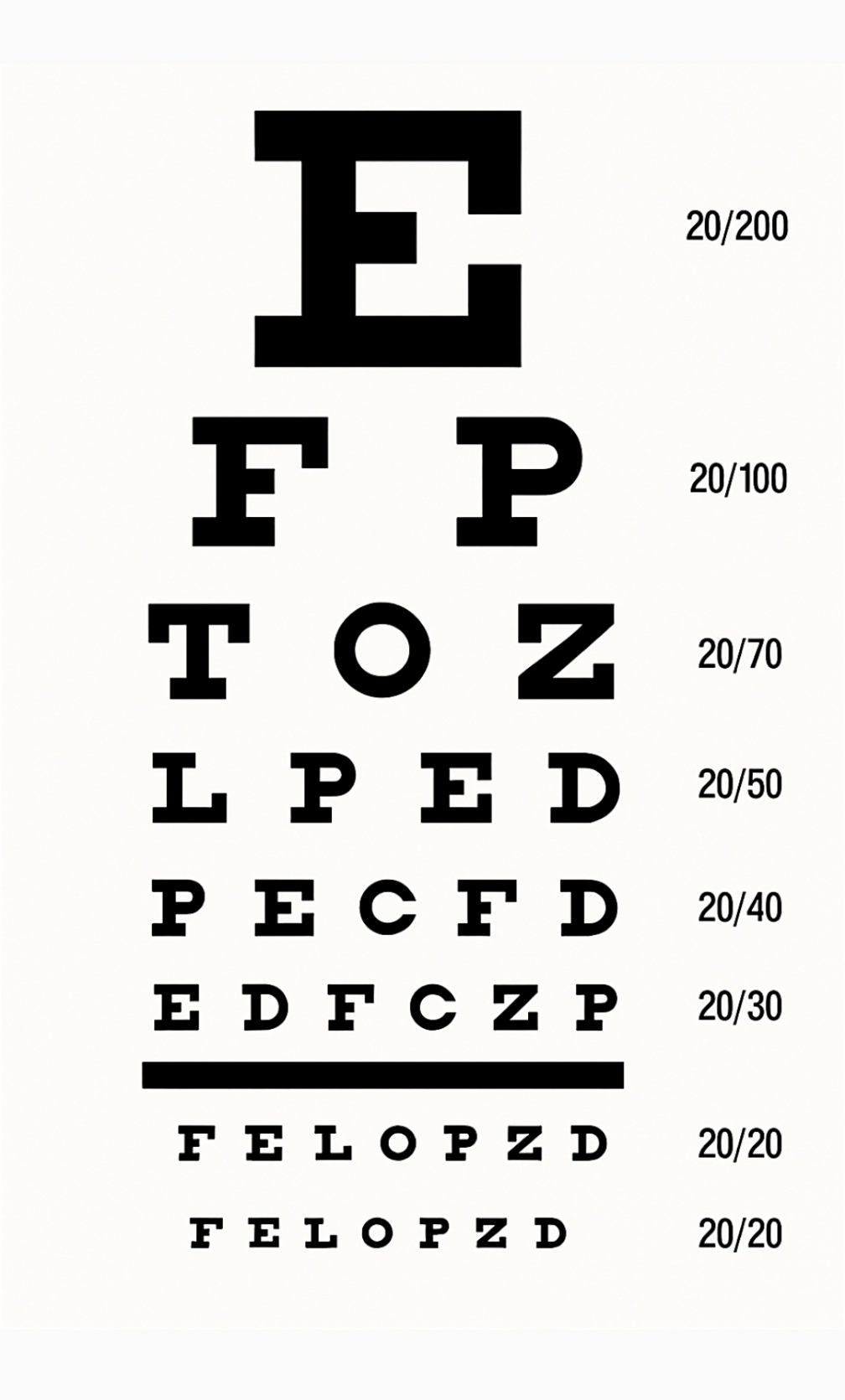
A Detailed Evaluation of the Snellen Eye Test Chart
The concept of "20/20 vision" often causes confusion. Many people first encounter it during an eye exam, staring at a bright chart with a big “E” on top. That chart is the Snellen Eye Test Chart, a standard tool for measuring visual acuity that has been in use since 1862.
Let’s take a closer look at what the test really measures and how it works.
What is Visual Acuity?
Visual acuity is a measure of the clarity and sharpness of your vision. It evaluates how well your eyes can distinguish shapes and details from a specific distance. During an eye test, you’re asked to identify the smallest line of letters you can read clearly — that’s your visual acuity.
The Man Behind the Chart
The Snellen chart was developed in 1862 by Dutch ophthalmologist Dr. Herman Snellen. Before that, there was no standardized method to test vision, and charts varied in style and size.
Dr. Snellen designed special characters called optotypes — typically letters like C, D, E, F, L, O, P, T, and Z — crafted to be seen at specific distances by someone with normal vision.
How is the Snellen Test Performed?
The Snellen test process has remained largely unchanged for over a century:
- The chart is placed 20 feet away from where you’re standing or sitting. If space is limited, mirrors may be used.
- You’ll be asked to cover one eye using an occluder or your hand.
- Reading the Chart: You read the letters from top to bottom, line by line. Each line has smaller letters than the one before.
- Stopping Point: When you can no longer correctly identify the majority of letters on a line, that’s where the test stops for that eye.
- The test is repeated for the other eye.
Understanding the Results: What Does 20/20 Mean?
Snellen test results are written as a fraction like 20/20. Here’s what the numbers mean:
- Top Number (20): The distance (in feet) between you and the chart.
- Bottom Number: The distance at which a person with normal vision can read that same line.
Examples:
- 20/20 Vision: You can read at 20 feet what a person with normal vision reads at 20 feet. This is considered normal vision.
- 20/40 Vision: You can read at 20 feet what a person with normal vision can read at 40 feet. Your vision is below average.
- 20/200 Vision: This is the threshold for legal blindness in many places, even with glasses or contacts.
- 20/15 Vision: Better than normal. You see at 20 feet what others see clearly only at 15 feet.
In countries using the metric system, 6/6 is the equivalent of 20/20 vision, as the test is performed at 6 meters instead of 20 feet.
Conclusion
The Snellen Eye Test Chart remains a cornerstone in eye care. It’s simple, effective, and helps detect vision problems early. Knowing your visual acuity can be the first step toward clearer sight and better eye health.