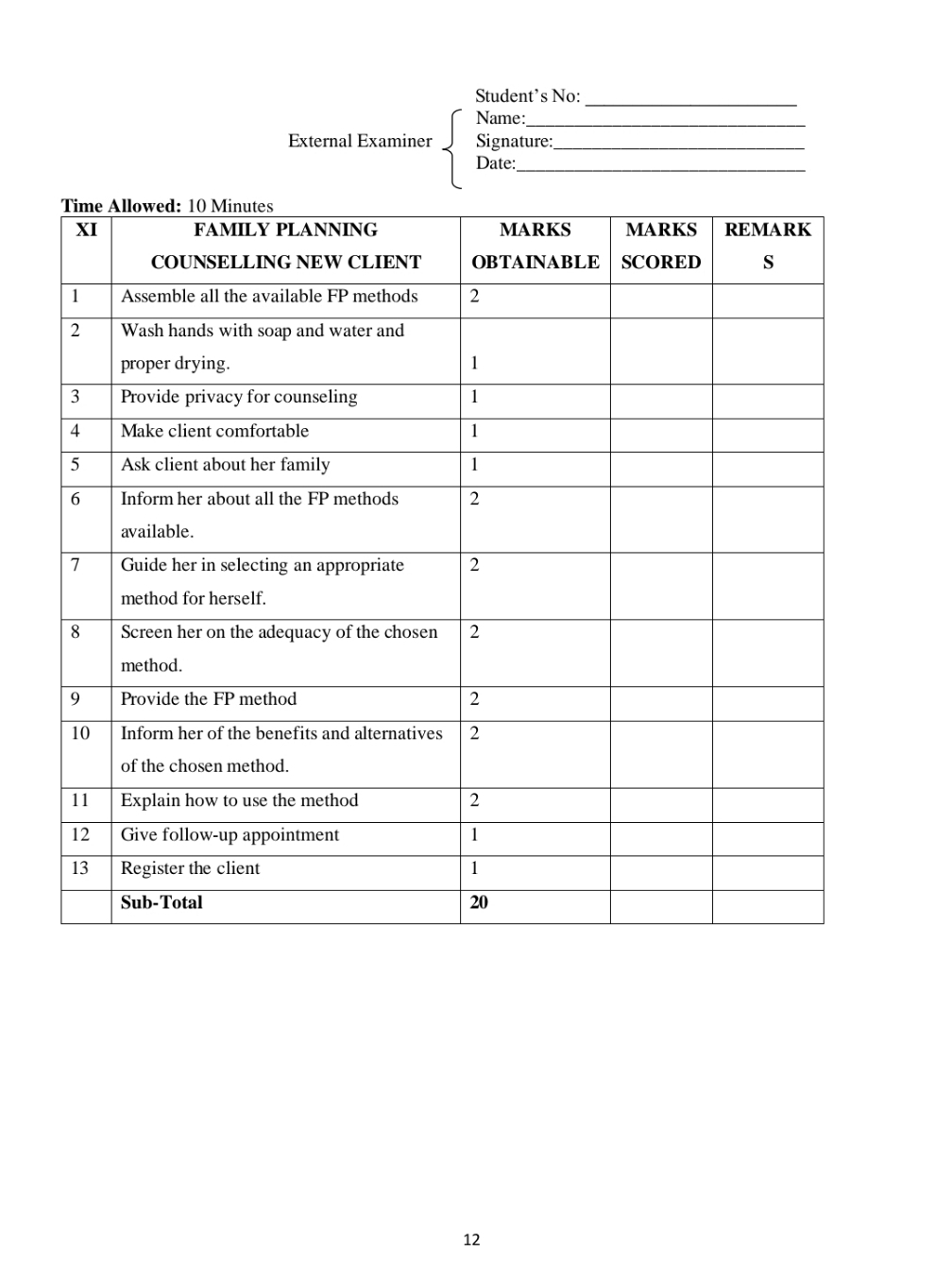
How to Use This Page
Work through each step in order. Open the accordion for details, scripts you can say, and quick reminders. Keep your tone friendly, respectful, and non-judgmental.
Quick Reference On the Job
- Assemble methods and materials
- Wash and dry hands
- Ensure privacy
- Make client comfortable
- Ask about family and goals
- Explain all methods neutrally
- Guide choice, do not decide
- Screen safety and suitability
- Provide method
- Explain benefits and alternatives
- Teach correct use
- Give follow-up date
- Register the client
Contents
- 1. Assemble all FP methods
- 2. Wash hands with soap and water
- 3. Provide privacy
- 4. Make client comfortable
- 5. Ask about her family
- 6. Inform her about all FP methods
- 7. Guide method selection
- 8. Screen for adequacy
- 9. Provide the method
- 10. Benefits and alternatives
- 11. Explain use
- 12. Follow-up appointment
- 13. Register the client
- Listen first
- Use plain language
- Avoid bias
- Confirm understanding
- Protect dignity and privacy
Have samples ready: pills, condoms, injectables, IUDs, implants, and readable flyers. Seeing and touching items makes choices clearer.
Do this before you touch any item or the client. It signals safety and professionalism.
Use a private room or screen. Reduce noise and interruptions. This builds trust and openness.
Greet warmly, offer a seat, and start with a simple question to help her relax.
Understand her current situation and plans. This informs the method choice.
- How many children do you have and how old are they?
- Do you plan more children? If yes, when?
- What matters most to you in a method? (effectiveness, side effects, convenience, privacy)
Explain how each method works, how effective it is, and typical side effects. Stay neutral.
Hormonal Methods
- Pills: Daily tablets. Combined or progestin-only. Mainly prevent ovulation.
- Injectables: Progestin shot, usually every 3 months. Prevents ovulation.
- Implants: Small rod in upper arm. Long-term protection for 3–5 years.
Intrauterine Devices (IUDs)
- Copper IUD: Non-hormonal. Copper impairs sperm. Lasts many years.
- Hormonal IUD: Low-dose progestin in uterus. Thickens mucus. Multi-year use.
Barrier Methods
- Male condoms: Single-use barrier. Also helps prevent most STIs.
- Female condoms: Vaginal pouch barrier. Some STI protection.
Permanent Methods
- Female sterilization: Blocks fallopian tubes.
- Male sterilization: Vasectomy blocks sperm transport.
Other Methods
- Fertility awareness-based: Track cycle signs and avoid sex on fertile days. Requires teaching and commitment.
Ask what she prefers and why. Help her weigh convenience, privacy, return to fertility, side effects, and clinic visits.
Review medical history, allergies, medications, blood pressure, and red flags.
- Hormonal methods: ask about hypertension, migraines with aura, history of blood clots, breast cancer.
- IUDs: ask about current pregnancy, unexplained vaginal bleeding, pelvic infection, distorted uterus.
- Barrier methods: check for latex allergy and ability to use correctly every time.
When safe and appropriate, give supplies or perform the procedure using clean technique and standard protocols.
Reassure her about the choice and keep the door open for change if needed.
Give clear steps and ask her to repeat the key points in her own words.
Pills
Take one every day at the same time. Start the next pack immediately after the current one.
- If you miss 1 combined pill: take as soon as you remember, then continue the pack.
- If you miss 2 or more combined pills: take the most recent missed pill now, continue the pack, and use condoms for 7 days.
- Progestin-only pill: if over 3 hours late, take the pill and use condoms for 2 days.
Injectables
Given today in the arm or buttock. Return in 3 months. Schedule the date now and set a phone reminder.
Implants
Small rod in the upper arm. Works for 3–5 years. Come back for removal or replacement when due, or sooner if you want to switch.
Condoms
- Use a new one each time from start to finish of sex.
- Check expiry date and wrapper seal.
- Hold the base during withdrawal and dispose safely.
IUDs
- You do not need daily action.
- Check strings monthly. Return if you cannot feel them or have severe pain, fever, or heavy bleeding.
- Attend your follow-up visit as scheduled.
Book a return date to check well-being, manage side effects, and confirm satisfaction.
Record client details, chosen method, counselling notes, lot numbers, dates, and follow-up plans in the register or EMR.
- Client identifiers and contact
- Method provided and quantity
- Any screening findings and vitals
- Return date and reminders set
Do’s and Don’ts
- Offer respectful, client-led counselling
- Give balanced information on all methods
- Check understanding with teach-back
- Document clearly and protect privacy
- Pressure the client into any method
- Skip safety screening
- Ignore side effects or concerns
- Discuss private details in public areas